How CRM Automation Improves Client Acquisition and Follow Up Efficiency
In today's competitive business landscape, attracting new clients is only one part of the growth journey. The real challenge lies in managing leads effectively, responding at the right time, and maintaining consistent communication throughout the customer journey. Many businesses lose valuable opportunities because of delayed responses, missed follow ups, or disorganised client information.
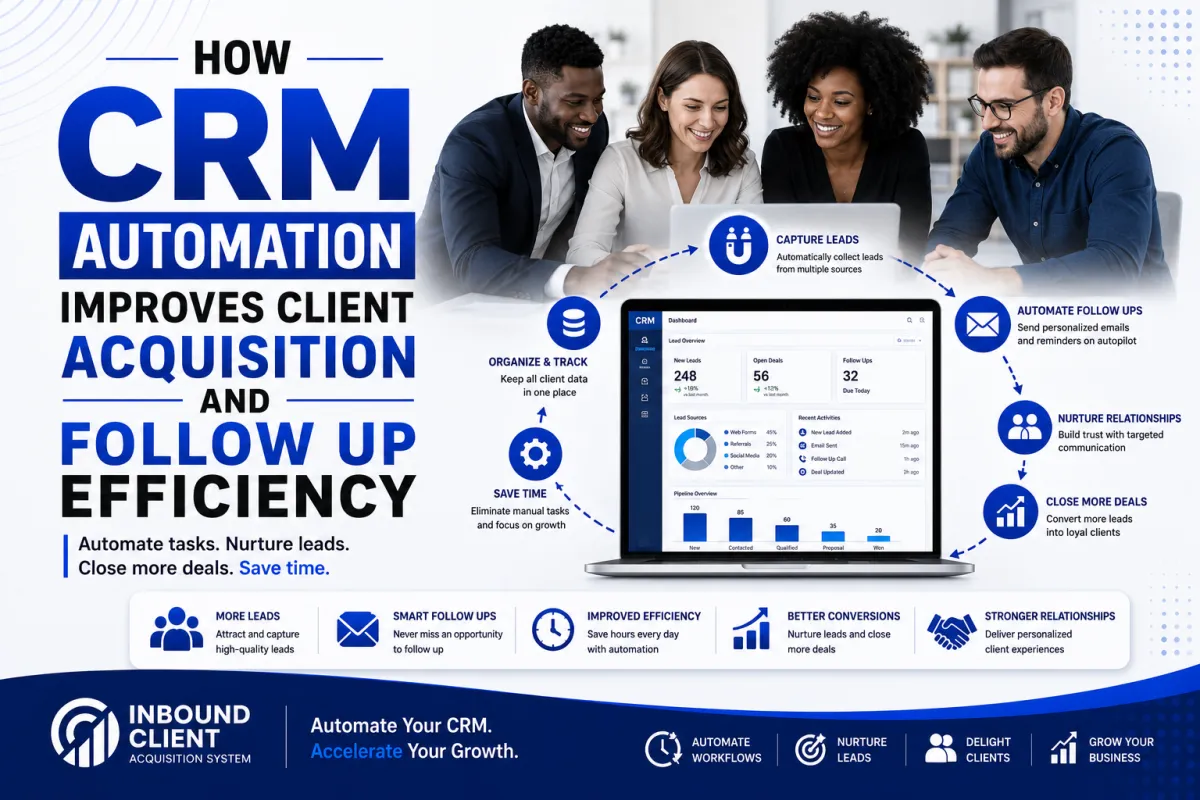
This is where CRM automation makes a significant difference. A Customer Relationship Management system equipped with automation features helps businesses streamline repetitive tasks, improve communication, and create a smoother experience for both teams and customers. Instead of spending hours on manual work, businesses can focus on building stronger relationships and closing more deals.
What Is CRM Automation?
CRM automation refers to the use of technology to automate routine customer relationship tasks within a CRM platform. These tasks may include sending follow up emails, assigning leads to sales representatives, scheduling reminders, updating customer records, and tracking customer interactions.
Rather than relying on manual processes, automation ensures that every lead receives timely attention while keeping customer information organised in one central location. This reduces human error and allows teams to work more efficiently.
How CRM Automation Improves Client Acquisition
Winning new clients requires speed, consistency, and personalised communication. CRM automation helps businesses achieve all three while reducing the workload on sales and marketing teams.
Faster Response Times
One of the biggest reasons businesses lose potential customers is slow response times. When someone submits an enquiry or requests information, they expect a quick reply. CRM automation can instantly send acknowledgement messages, assign the enquiry to the right team member, and trigger the next step in the sales process.
This immediate response creates a positive first impression and increases the chances of converting the lead into a customer.
Better Lead Management
As businesses grow, managing hundreds or even thousands of leads manually becomes difficult. CRM automation organises leads based on predefined criteria such as location, industry, purchase interest, or enquiry type.
Sales teams can then prioritise high quality leads and spend more time engaging with prospects who are most likely to convert. This structured approach improves productivity and increases conversion rates.
Personalised Customer Communication
Modern customers appreciate personalized experiences. CRM automation allows businesses to send tailored messages based on customer behaviour, preferences, or previous interactions.
For example, a customer who downloads a product brochure can automatically receive additional information relevant to their interests. This level of personalisation helps build trust and keeps potential clients engaged throughout the buying process.
Improving Follow Up Efficiency
Following up consistently is often the difference between winning and losing a sale. However, manual follow ups are easy to forget, especially when sales teams manage multiple prospects at the same time.
CRM automation ensures that no opportunity slips through the cracks.
Automatic Follow Up Reminders
Sales representatives no longer need to rely on memory or handwritten notes. Automated reminders notify team members when it is time to contact a prospect, schedule a meeting, or send additional information.
This creates a structured sales process where every lead receives the attention it deserves.
Consistent Communication
Not every prospect is ready to buy immediately. Some may require weeks or even months before making a decision. CRM automation allows businesses to stay connected through scheduled emails, updates, and educational content without requiring manual effort every time.
Consistent communication keeps the business top of mind and increases the likelihood of future conversions.
Reduced Administrative Work
Manual data entry consumes valuable time that could be spent speaking with customers. CRM automation records interactions, updates customer profiles, and logs communication automatically.
This allows sales professionals to focus on relationship building rather than repetitive administrative tasks.
Better Collaboration Across Teams
Client acquisition is not solely the responsibility of the sales department. Marketing, customer service, and management all play important roles in delivering a positive customer experience.
CRM automation creates a shared platform where every department has access to updated customer information. Team members can view communication history, customer preferences, and previous interactions, ensuring everyone works with the same accurate information.
This improved collaboration reduces confusion, prevents duplicated efforts, and creates a seamless customer journey.
Improved Reporting and Business Insights
Data plays an important role in making informed business decisions. CRM automation collects valuable information about customer behaviour, sales performance, response times, and campaign effectiveness.
Business owners can use these insights to identify successful strategies, improve weak areas, and make better decisions based on real data rather than assumptions.
Accurate reporting also helps forecast future sales and allocate resources more effectively.
Enhanced Customer Experience
Customers value businesses that communicate professionally and respond quickly. CRM automation helps create a smooth and organised experience from the first enquiry to long term customer support.
Automated communication, timely follow ups, and accurate customer records demonstrate professionalism and reliability. When customers feel valued and supported, they are more likely to remain loyal and recommend the business to others.
Why Businesses Should Invest in CRM Automation
Whether you operate a small business or a large organisation, CRM automation offers measurable benefits. It saves time, reduces manual errors, improves customer engagement, and supports long term business growth.
By automating repetitive tasks, teams become more productive while customers receive faster and more consistent service. This combination leads to higher client acquisition rates and stronger customer relationships.
As customer expectations continue to rise, businesses that embrace CRM automation are better positioned to stay competitive and deliver exceptional experiences.
Conclusion
CRM automation is no longer just a convenience. It has become an essential tool for businesses that want to attract more clients, improve follow up efficiency, and strengthen customer relationships. By automating routine processes, businesses can respond faster, manage leads more effectively, and maintain meaningful communication throughout the customer journey.
Investing in CRM automation with Inbound Client Acquisition System not only improves internal efficiency but also creates a better experience for customers. Over time, these improvements contribute to increased conversions, stronger loyalty, and sustainable business growth.
Frequently Asked Questions
1. What is the main purpose of CRM automation?
CRM automation simplifies repetitive customer management tasks such as follow ups, lead assignment, reminders, and data updates, allowing teams to focus on building customer relationships.
2. Can small businesses benefit from CRM automation?
Yes. Small businesses can improve lead management, respond to enquiries faster, and maintain organised customer records without increasing manual workload.
3. Does CRM automation replace sales teams?
No. CRM automation supports sales teams by handling routine tasks while allowing professionals to spend more time engaging with prospects and closing deals.
4. How does CRM automation increase customer satisfaction?
It ensures timely communication, consistent follow ups, accurate customer information, and personalised interactions, resulting in a more positive customer experience.