
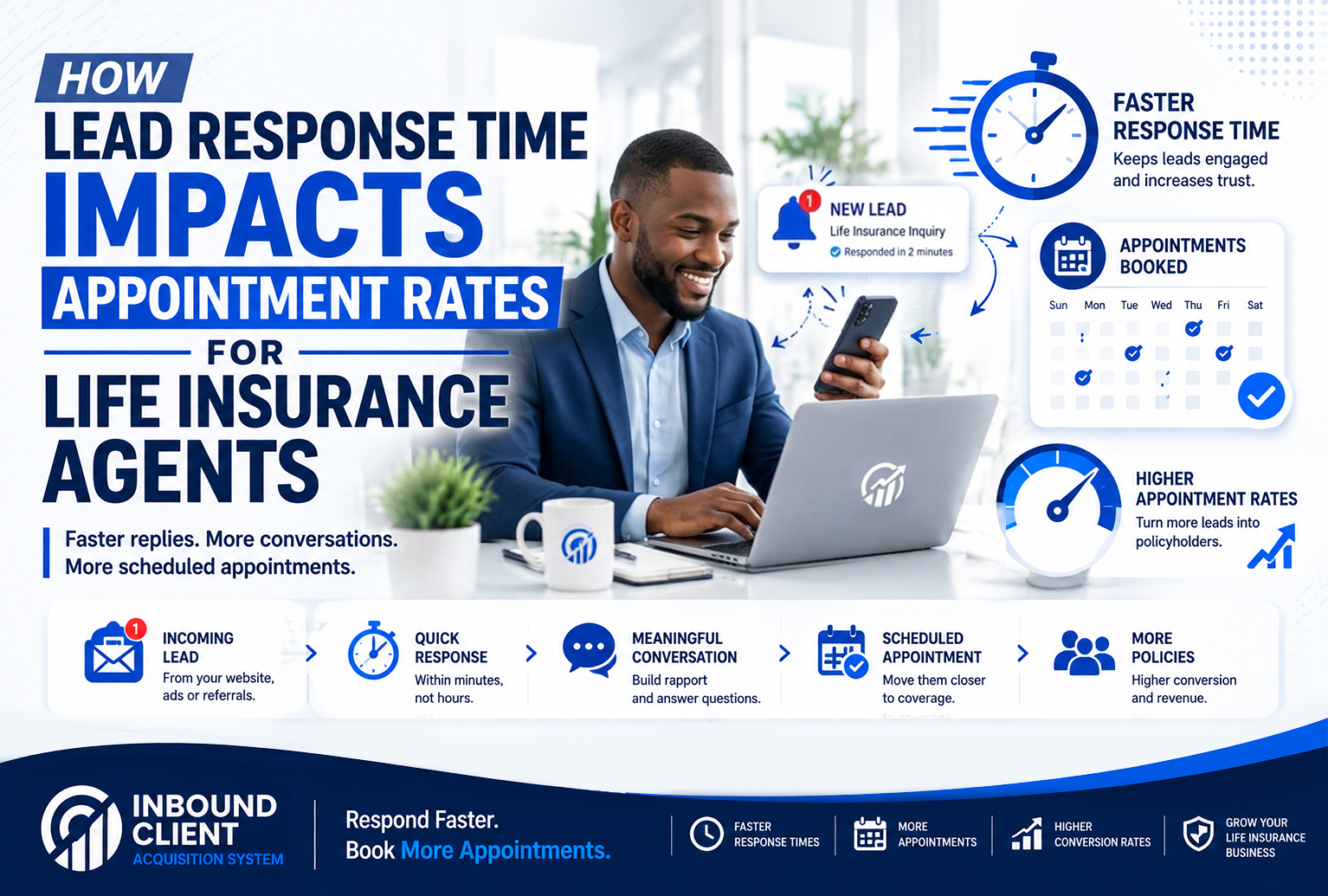
Lead Response Time and Life Insurance Appointment Rates
For life insurance agents, getting a new lead is only the beginning. What happens in the minutes after that lead comes in can have a major impact on whether the prospect becomes a real conversation, an appointment, or simply another missed opportunity.
Today, people expect quick responses. When someone requests information about life insurance online, they are often actively researching their options at that exact moment. If an agent waits too long to respond, that prospect may move on, submit another form, contact another agent, or simply lose interest.
This is why lead response time matters so much for life insurance agents who want to improve appointment rates and get more value from their marketing.
What Is Lead Response Time?
Lead response time is the amount of time between when a prospect submits an inquiry and when an agent or their system responds.
For example, if someone requests life insurance information at 2:00 PM and receives a call or message at 2:02 PM, the response time is two minutes.
That may sound like a small detail, but those minutes can make a meaningful difference. A prospect who has just requested information is actively thinking about life insurance. Their interest is fresh, their questions are likely top of mind, and they may be ready to have a conversation.
The longer an agent waits, the greater the chance that the prospect becomes distracted or starts looking elsewhere.
Why Speed Matters for Life Insurance Leads
Think about what happens after someone fills out a life insurance form.
They may still be comparing policies. They may have questions about coverage. They may be checking prices. They may even be completing forms for several different insurance agencies.
The agent who responds quickly has an opportunity to start the conversation while the prospect is still engaged.
Waiting an hour changes the situation. Waiting until the next day can change it even more.
This is especially important with inbound leads because the prospect has already taken action. They have shown some level of interest by requesting information or reaching out. The agent's job is to capitalize on that interest before it disappears.
Speed does not replace good sales skills. Instead, it gives those skills a better opportunity to work.
Faster Responses Can Lead to More Appointments
The connection between lead response time and appointment rates is straightforward. A prospect cannot book an appointment if the agent never reaches them.
A prospect who answers the phone can ask questions, explain their situation, and decide whether they want to continue the conversation. That interaction creates an opportunity to build trust, understand their needs, and move them toward an appointment.
The faster that first conversation happens, the less opportunity there is for the prospect to become distracted or contacted by someone else.
For life insurance agents using inbound marketing, having a system that delivers leads quickly and begins follow up automatically can make this process much easier. Instead of waiting for a lead to be manually processed, the prospect can enter a structured follow up process almost immediately.
That speed can help create stronger conversations, higher engagement, and more opportunities to schedule appointments.
What Happens When Agents Respond Too Slowly?
Slow response times create several problems.
First, the prospect's interest can decline. Someone who was ready to discuss life insurance a few minutes ago may not feel the same way several hours later.
Second, competitors have more time to reach the prospect. In a competitive insurance market, being second to the conversation can make the sale more difficult.
Third, slow follow up can make an agent's marketing appear less effective than it actually is. An agent may believe they need more leads when the real problem is what happens after the lead arrives.
This is an important distinction.
Generating leads is only one part of client acquisition. The process used to respond to, follow up with, qualify, and schedule those leads is just as important.
If an agent spends money generating high intent life insurance leads but takes hours to contact them, the problem may not be lead quality. The problem could be response time.
How Life Insurance Agents Can Improve Lead Response Time
The goal should not simply be to remind yourself to respond faster. A better approach is to build a system that makes fast response part of the process.
Start by making sure new leads are delivered immediately. Your CRM or lead management system should notify the right person without unnecessary manual steps.
Next, use automated messaging to acknowledge the prospect's request. A simple and professional message can let the prospect know that their inquiry was received and that someone will be reaching out.
Then, make personal contact as quickly as possible. Automation should support the agent, not replace the importance of a real conversation.
Finally, make it easy for qualified prospects to schedule an appointment. A calendar system can eliminate unnecessary back and forth and allow prospects to choose a convenient time.
This creates a smoother journey from lead generation to conversation and ultimately to appointment.
Lead Response Time Is About More Than Speed
It is easy to think of lead response time as simply a race to make the first phone call.
But the bigger picture is about creating a better experience.
When someone requests information about life insurance, they want to know that their request was received. They want answers to their questions. They want an agent who is available and prepared to help.
A quick response communicates professionalism and attentiveness.
That first interaction can set the tone for everything that follows.
For agents who want to increase life insurance appointment rates, improving response time can therefore be one of the most practical areas to focus on.
Frequently Asked Questions
What is a good lead response time for life insurance agents?
Aiming to respond within five minutes is a strong goal. The sooner an agent responds, the better the chance of connecting with the prospect while their interest is still fresh.
Does faster lead response really increase appointment rates?
A faster response can improve the opportunity to connect with prospects while they are actively interested. More meaningful conversations can lead to more opportunities to qualify prospects and schedule appointments.
Can automation improve lead response time?
Yes. Automated lead delivery, immediate messaging, follow up sequences, and appointment scheduling can help agents respond consistently without relying entirely on manual processes.
What should life insurance agents do if they are getting leads but few appointments?
Look beyond lead volume. Review how quickly leads are contacted, how consistently follow up happens, how many attempts are being made, and how easy it is for prospects to schedule an appointment. Improving the process after a lead arrives can sometimes have a bigger impact than simply generating more leads.