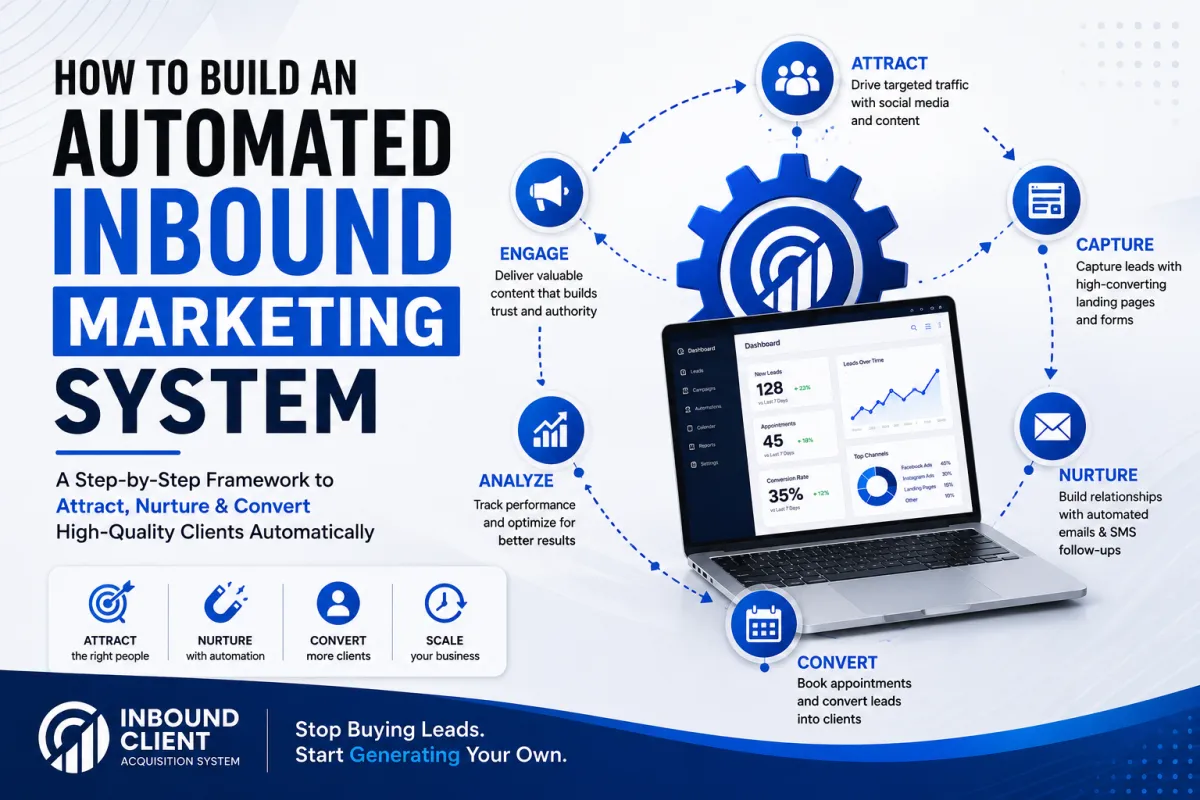
How to Build an Automated Inbound Marketing System
For B2B companies, attracting the right prospects is only one part of the growth equation. The real challenge is creating a system that consistently converts visitors into qualified leads without requiring constant manual effort. This is where an automated inbound marketing system becomes a competitive advantage.
Instead of relying on cold outreach or one time marketing campaigns, inbound marketing focuses on attracting potential customers through valuable content, personalized communication, and strategic automation. When built correctly, it works around the clock to generate leads, nurture relationships, and support your sales team with better qualified prospects.
In this guide, you will learn how to build an automated inbound marketing system that drives sustainable B2B growth while improving efficiency across your marketing and sales processes.
Understand Your Ideal Customer
Every successful inbound marketing strategy starts with a deep understanding of your target audience. Automation only delivers results when the right message reaches the right people at the right time.
Begin by defining your ideal customer profile. Consider factors such as industry, company size, decision maker roles, business challenges, and purchasing behavior. Then create detailed buyer personas that reflect the goals, concerns, and priorities of your prospects.
Understanding these insights allows you to create content and automated workflows that feel relevant instead of generic.
Create Valuable Content for Every Stage of the Buyer Journey
Content is the engine of every inbound marketing system. Your audience searches for answers long before they are ready to speak with a sales representative. By providing helpful resources, you position your business as a trusted advisor.
Develop content that supports every stage of the buyer journey.
At the awareness stage, focus on educational blog articles, industry insights, and thought leadership content.
During the consideration stage, provide detailed guides, webinars, comparison articles, and practical solutions to common business problems.
At the decision stage, offer case studies, product demonstrations, customer success stories, and consultation opportunities that help prospects evaluate your solution with confidence.
A consistent content strategy ensures your automation always has valuable resources to deliver.
Capture High Quality Leads
Generating website traffic is important, but converting visitors into leads is what drives business growth.
Your website should include clear opportunities for visitors to share their information in exchange for valuable resources. This could include downloadable guides, industry reports, templates, or exclusive research.
Keep your forms simple and only request information that supports your qualification process. Asking for too much information too early often reduces conversion rates.
Effective calls to action placed throughout your website encourage visitors to take the next step without interrupting their experience.
Build Automated Lead Nurturing Workflows
Not every visitor is ready to buy immediately. This is why lead nurturing is essential for B2B marketing.
Automation allows you to stay connected with prospects by delivering timely and relevant communication based on their actions. For example, someone who downloads a guide can automatically receive additional educational content over the following weeks.
As prospects engage with your emails, visit key website pages, or interact with specific content, your workflows can adapt based on their interests.
This personalized approach builds trust while moving prospects naturally toward a purchasing decision.
Align Marketing and Sales
One of the biggest benefits of an automated inbound marketing system is stronger collaboration between marketing and sales.
Marketing automation can identify when a lead demonstrates buying intent through repeated website visits, content engagement, or product page activity. Once a lead reaches predefined qualification criteria, it can be automatically assigned to the appropriate sales representative.
This ensures sales teams spend their time engaging with prospects who are genuinely interested rather than contacting every lead generated through marketing.
Clear communication between both teams improves conversion rates and shortens the overall sales cycle.
Use Lead Scoring to Prioritize Opportunities
Not every lead has the same potential value. Lead scoring helps identify which prospects deserve immediate attention.
Assign scores based on demographic information and behavioral signals. Factors may include job title, company size, website visits, email engagement, content downloads, and product related interactions.
As leads accumulate points, your automation platform can trigger new workflows or notify sales representatives when a lead becomes sales ready.
This approach improves efficiency while helping sales teams focus on opportunities with the highest likelihood of conversion.
Measure Performance and Continuously Optimize
Automation is not something you build once and forget. Continuous optimization is essential for long term success.
Track key performance indicators such as website traffic, conversion rates, landing page performance, email engagement, lead quality, and customer acquisition costs.
Analyze where prospects enter your funnel, where they disengage, and which content generates the highest quality leads.
Small improvements across your content, forms, email sequences, and workflows can significantly improve overall performance over time.
Regular testing ensures your inbound marketing system continues to evolve alongside customer expectations and market changes.
Common Mistakes to Avoid
Many B2B companies invest in automation tools without developing a clear strategy. Technology alone cannot replace valuable content or a strong understanding of customer needs.
Avoid sending the same message to every prospect. Personalization is one of the biggest strengths of marketing automation.
Another common mistake is focusing only on lead volume instead of lead quality. Generating fewer but highly qualified leads often delivers better business results than attracting large numbers of unqualified contacts.
Finally, review your workflows regularly to ensure they remain relevant as your products, services, and customer needs evolve.
Conclusion
An automated inbound marketing system creates a scalable foundation for consistent B2B growth. By understanding your audience, creating valuable content, capturing qualified leads, nurturing prospects through automation, and aligning marketing with sales, you can build a system that generates results long after each campaign is launched.
The goal is not simply to automate tasks. It is to create meaningful customer experiences that build trust and guide prospects through every stage of the buying journey. Businesses that invest in strategic inbound marketing automation are better positioned to increase lead quality, improve conversion rates, and achieve sustainable long term growth.
Frequently Asked Questions
1. What is an automated inbound marketing system?
An automated inbound marketing system combines content marketing, lead generation, email automation, customer relationship management, and lead nurturing to attract, engage, and convert potential customers with minimal manual effort.
2. Why is inbound marketing important for B2B businesses?
B2B buyers often conduct extensive research before making purchasing decisions. Inbound marketing helps businesses educate prospects, build credibility, and establish trust throughout the buying process, resulting in higher quality leads.
3. How long does it take to see results from inbound marketing?
Results vary depending on your industry, competition, and content strategy. Many B2B businesses begin seeing measurable improvements within three to six months, while long term growth continues as content and automation mature.
4. What are the key components of an automated inbound marketing system?
The essential components include a well optimized website, valuable content, lead capture forms, email automation, customer relationship management software, lead scoring, workflow automation, and ongoing performance analysis.