
Digital Client Acquisition for Life Insurance Teams
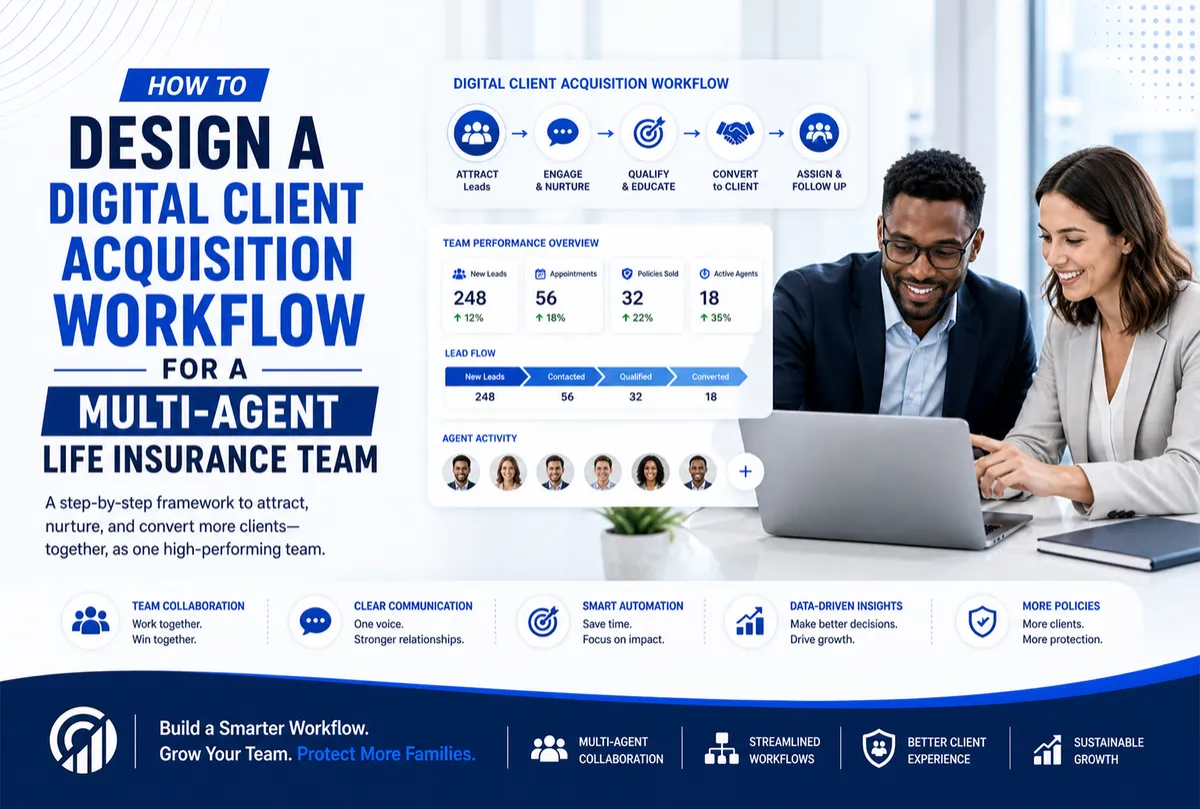
Building a successful life insurance agency takes more than hiring good agents and generating leads. As your team grows, you need a reliable process for attracting prospects, capturing their information, following up with them, and getting them connected with the right agent. This is where a digital client acquisition workflow becomes valuable.
Instead of relying on agents to manually manage every lead, a well designed workflow connects marketing, lead capture, follow up, lead assignment, and appointment scheduling. The result is a more organized process that gives your agents more time to focus on conversations and clients.
Start With Your Ideal Client
Before building your workflow, get clear about who you want to attract. A life insurance team may serve families, business owners, young professionals, retirees, or people looking for specific types of coverage.
Your marketing and lead generation process should be built around the needs of the audience you want to reach. Once you understand your ideal client, you can create advertising and landing page messaging that speaks directly to their concerns.
For example, someone researching life insurance for their family may respond to a message about protecting their family's financial future. A business owner may be more interested in coverage designed around business continuity or financial planning. The more relevant your message is, the easier it becomes to attract people who are genuinely interested.
Create One Simple Path for New Leads
Once a prospect responds to your marketing, make the next step simple. Many insurance teams lose potential opportunities because the process is complicated. A person may see an advertisement, visit a website, fill out a form, and then have no idea what happens next.
A strong client acquisition workflow removes that uncertainty. Your advertising can direct prospects to a focused landing page where they can provide their information and request a conversation. Once the form is submitted, the lead should automatically enter your system.
From there, the workflow can trigger notifications, follow up messages, and assignment to an appropriate agent. The prospect should never have to wonder whether their request was received.
Organize Leads in One Place
As your team generates more leads, keeping track of them becomes increasingly difficult without a centralized system. A CRM or lead management platform can give your agents and managers a clear view of every opportunity. Instead of searching through emails, spreadsheets, text messages, and different advertising platforms, the team can work from one organized pipeline.
Each lead should have a clear status. You might have stages such as new lead, contacted, conversation started, appointment scheduled, appointment completed, application in progress, and closed. This simple structure makes it much easier to understand what is happening with your pipeline.
Assign Every Lead to the Right Agent
Lead distribution is especially important for a multi agent life insurance team. When leads are assigned manually, delays and confusion can happen quickly. An agent may assume someone else is handling a prospect, while another agent may contact the same person.
A digital workflow can automatically assign leads according to rules established by your agency. You might distribute leads based on agent availability, location, product experience, working hours, or a round robin system.
The specific approach can vary, but the principle remains the same. Every lead should have a clear owner. When an agent receives a new opportunity, they should also have access to the information they need to start the conversation.
Respond While the Prospect Is Still Interested
Timing can make a significant difference in digital lead generation. Someone who has just requested information about life insurance is actively thinking about the subject. If several hours or days pass before anyone contacts them, their priorities may have changed.
That is why automated notifications and immediate follow up are important parts of a modern client acquisition workflow. An automated message can confirm that the request was received while notifying the assigned agent that a new lead is available.
This does not mean every interaction needs to be automated. The purpose is to make sure the first step happens quickly and consistently. The personal conversation should still come from the agent.
Build a Follow Up System
Not every prospect will answer the first phone call. That is normal. The problem occurs when there is no process for what happens afterward. A structured follow up workflow gives agents a clear way to continue the conversation.
Depending on your agency's processes and applicable communication requirements, this could include additional calls, text messages, emails, and appointment reminders. The messaging should feel helpful and relevant. Prospects should understand why they are being contacted and what their next step can be.
Consistency matters more than sending a large number of messages. A simple, thoughtful follow up process can help your team avoid letting potentially valuable leads disappear simply because the first contact attempt was unsuccessful.
Make Booking an Appointment Easy
Once a prospect is ready to speak with an agent, scheduling should be straightforward. Instead of asking prospects to exchange several messages to find a suitable time, connect your workflow with an appointment calendar. The prospect can choose from available times, while the system records the appointment for the assigned agent. Confirmation and reminder messages can also help keep everyone informed.
For managers, appointment scheduling provides another useful advantage. It gives them visibility into agent calendars and upcoming opportunities, making it easier to understand how leads are moving through the pipeline.
Track What Happens After the Lead Arrives
Generating leads is only one part of client acquisition. You also need to know what happens after those leads enter your system. Track important numbers such as how many leads are being generated, how quickly agents respond, how many prospects are contacted, how many appointments are booked, how many appointments are attended, and how many prospects eventually become clients.
These numbers can reveal problems that are otherwise difficult to see. For example, if your marketing generates a steady flow of leads but appointments remain low, your team may need to examine its qualification or follow up process.
If appointments are being booked but many prospects do not attend, your reminders and confirmation process may need improvement. Data gives you a clearer picture of where your workflow needs attention.
Build a Process That Grows With Your Team
A client acquisition workflow should not only work when you have a few agents. It should continue working as your agency grows. Your lead generation campaigns, landing pages, lead routing, follow up sequences, appointment scheduling, and reporting should operate as connected parts of the same system.
This creates consistency across your team. New agents can follow an established process instead of creating their own approach from scratch. Managers can monitor performance more easily.
Prospects receive a more consistent experience regardless of which agent handles their inquiry. That is the real value of a digital client acquisition workflow. It turns client acquisition from a collection of disconnected tasks into a repeatable process.
Final Thoughts
A multi agent life insurance team needs more than a steady supply of leads. It needs a system that can turn those leads into conversations and conversations into opportunities. The right digital client acquisition workflow connects every important step.
It attracts potential clients through targeted marketing, captures their information, routes leads to the appropriate agents, supports timely follow up, makes appointment scheduling simple, and provides visibility into the entire process.
When these pieces work together, your agents can spend less time managing administrative tasks and more time doing what they do best: speaking with prospects, understanding their needs, and building client relationships.
The goal is not to make your sales process complicated. It is to make it organized, consistent, and easier to manage as your life insurance team grows.
Frequently Asked Questions
What is a digital client acquisition workflow for life insurance?
It is a structured process that connects online marketing, lead capture, lead assignment, follow up, and appointment scheduling. It helps a life insurance team manage prospects from their first interaction through the sales process.
Why is lead routing important for a multi agent team?
Lead routing ensures that every new prospect is assigned to a specific agent. This helps prevent delays, duplicate communication, and confusion about who is responsible for following up.
How can automation help a life insurance agency?
Automation can handle repetitive tasks such as lead notifications, confirmation messages, follow up reminders, and appointment scheduling. This allows agents to spend more time communicating directly with prospects.
What should a life insurance team measure?
Teams can monitor lead volume, response times, contact rates, appointments booked, appointment attendance, applications, and conversions. These measurements help identify where prospects are being lost and where the acquisition process can be improved.