
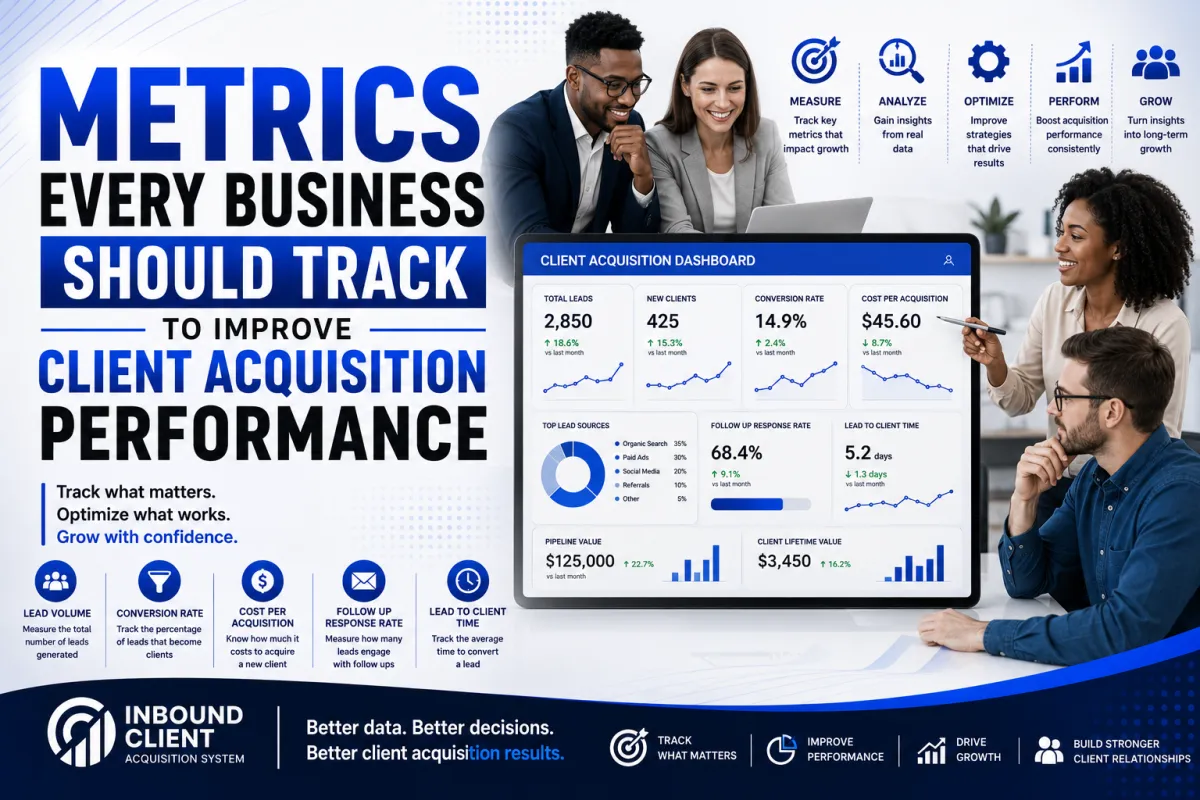
Metrics Every Business Should Track to Improve Client Acquisition Performance
Growing a business is not just about attracting more visitors or generating more leads. The real goal is turning potential customers into loyal clients while making the best use of your marketing budget. To achieve this, businesses need to measure the right performance metrics instead of relying on assumptions.
Tracking key client acquisition metrics helps you understand what is working, what needs improvement, and where your resources should be invested. By monitoring these numbers consistently, you can make informed decisions that increase conversions, improve customer relationships, and maximise long term growth.
Why Client Acquisition Metrics Matter
Every marketing campaign, advertisement, and sales effort produces valuable data. Without measuring that data, businesses often waste time and money on strategies that deliver little return.
Client acquisition metrics provide clear insights into customer behaviour, campaign effectiveness, and sales performance. They also help identify opportunities to improve the customer journey, allowing businesses to attract better quality leads and convert them more efficiently.
Instead of focusing only on increasing traffic, businesses should pay attention to how effectively that traffic becomes paying customers.
Customer Acquisition Cost
Customer Acquisition Cost, often called CAC, is one of the most important metrics for measuring business growth. It shows how much money your business spends to acquire a single new customer.
To calculate it, divide your total marketing and sales expenses by the number of new customers gained during the same period.
A lower acquisition cost generally indicates that your marketing efforts are becoming more efficient. However, reducing costs should never come at the expense of lead quality. The goal is to maintain a healthy balance between spending and customer value.
Conversion Rate
A high number of website visitors means little if they are not taking action. Conversion rate measures the percentage of visitors who complete a desired action, such as filling out a contact form, requesting a quote, or making a purchase.
Improving conversion rates often involves refining website content, improving page speed, simplifying forms, and creating stronger calls to action.
Even a small increase in conversion rate can significantly improve client acquisition without increasing marketing spend.
Lead to Client Conversion Rate
Generating leads is only the beginning of the sales process. Businesses should also monitor how many of those leads become paying clients.
A low lead to client conversion rate may indicate problems such as poor lead quality, ineffective sales communication, or delays in following up with prospects.
Reviewing this metric regularly allows businesses to identify weaknesses in their sales process and improve overall performance.
Customer Lifetime Value
Customer Lifetime Value measures the total revenue a customer is expected to generate throughout their relationship with your business.
This metric helps determine how much you can reasonably spend to acquire new clients while remaining profitable.
Businesses with high customer lifetime value can often invest more in marketing because each customer generates greater long term returns through repeat purchases and ongoing relationships.
Return on Marketing Investment
Every business wants to know whether its marketing activities are producing positive results. Return on Marketing Investment measures the revenue generated compared to the money spent on marketing campaigns.
Tracking this metric helps businesses understand which marketing channels deliver the strongest returns. It also supports smarter budgeting decisions by shifting investment towards the most effective strategies.
Rather than spreading your budget evenly across every platform, focus on the channels that consistently produce qualified clients.
Website Traffic Quality
Many businesses celebrate increasing website traffic, but visitor quality matters far more than visitor quantity.
Pay attention to metrics such as:
Time spent on your website
Pages viewed during each visit
Bounce rate
Returning visitors
When visitors stay longer and explore multiple pages, they are usually more interested in your products or services. Understanding user behaviour allows you to improve content and create a more engaging experience.
Sales Cycle Length
Sales cycle length measures the average time it takes for a prospect to become a paying customer.
A lengthy sales process may suggest unnecessary delays, unclear communication, or complicated buying procedures. By identifying bottlenecks, businesses can streamline their sales process and close deals more efficiently.
Reducing the sales cycle often leads to improved cash flow and faster business growth.
Customer Retention Rate
While acquiring new clients is essential, retaining existing customers is equally important. Repeat customers are generally more profitable because they already trust your business and often require less marketing effort.
Tracking customer retention helps businesses evaluate customer satisfaction and identify opportunities to strengthen long term relationships.
Satisfied customers are also more likely to recommend your business to others, creating additional opportunities for organic growth.
Lead Source Performance
Not every lead source delivers the same value. Some marketing channels consistently generate high quality clients, while others may produce large numbers of unqualified leads.
Compare the performance of different acquisition channels, including search engines, social media, email marketing, referrals, and paid advertising.
Understanding where your best clients come from allows you to invest your resources more effectively and eliminate underperforming campaigns.
Using Metrics to Drive Better Decisions
Collecting data is only valuable when it leads to meaningful action. Businesses should review their key metrics regularly and use the insights to improve marketing strategies, optimise sales processes, and enhance customer experiences.
Rather than chasing every available metric, focus on the indicators that directly influence revenue, profitability, and customer growth. Consistent measurement allows businesses to adapt quickly, respond to changing market conditions, and make decisions based on evidence rather than guesswork.
Conclusion
A successful Inbound Client Acquisition System depends on more than attracting attention. It requires understanding how potential customers move through the buying journey and identifying the factors that influence their decisions.
By tracking metrics such as Customer Acquisition Cost, Conversion Rate, Customer Lifetime Value, Return on Marketing Investment, and Customer Retention Rate, businesses gain a clearer picture of their overall performance. These insights help improve marketing efficiency, strengthen sales strategies, and create sustainable growth over time.
Businesses that consistently monitor and act on these metrics are better positioned to attract high quality clients, increase profitability, and stay ahead in an increasingly competitive marketplace.
Frequently Asked Questions
Which client acquisition metric is the most important?
Customer Acquisition Cost is one of the most important metrics because it shows how efficiently your business converts marketing and sales spending into new customers. However, it should always be analysed alongside Customer Lifetime Value for a complete picture.
How often should businesses track acquisition metrics?
Most businesses benefit from reviewing key metrics every month. Weekly monitoring can be useful for active marketing campaigns, while quarterly reviews help identify long term trends and opportunities.
Why is Customer Lifetime Value important?
Customer Lifetime Value helps businesses understand the long term revenue generated by each customer. It also guides marketing budgets and supports more profitable client acquisition strategies.
Can small businesses benefit from tracking these metrics?
Yes. Businesses of all sizes can improve marketing performance by measuring the right metrics. Even simple tracking can reveal valuable insights that help increase conversions, reduce costs, and improve customer satisfaction.