
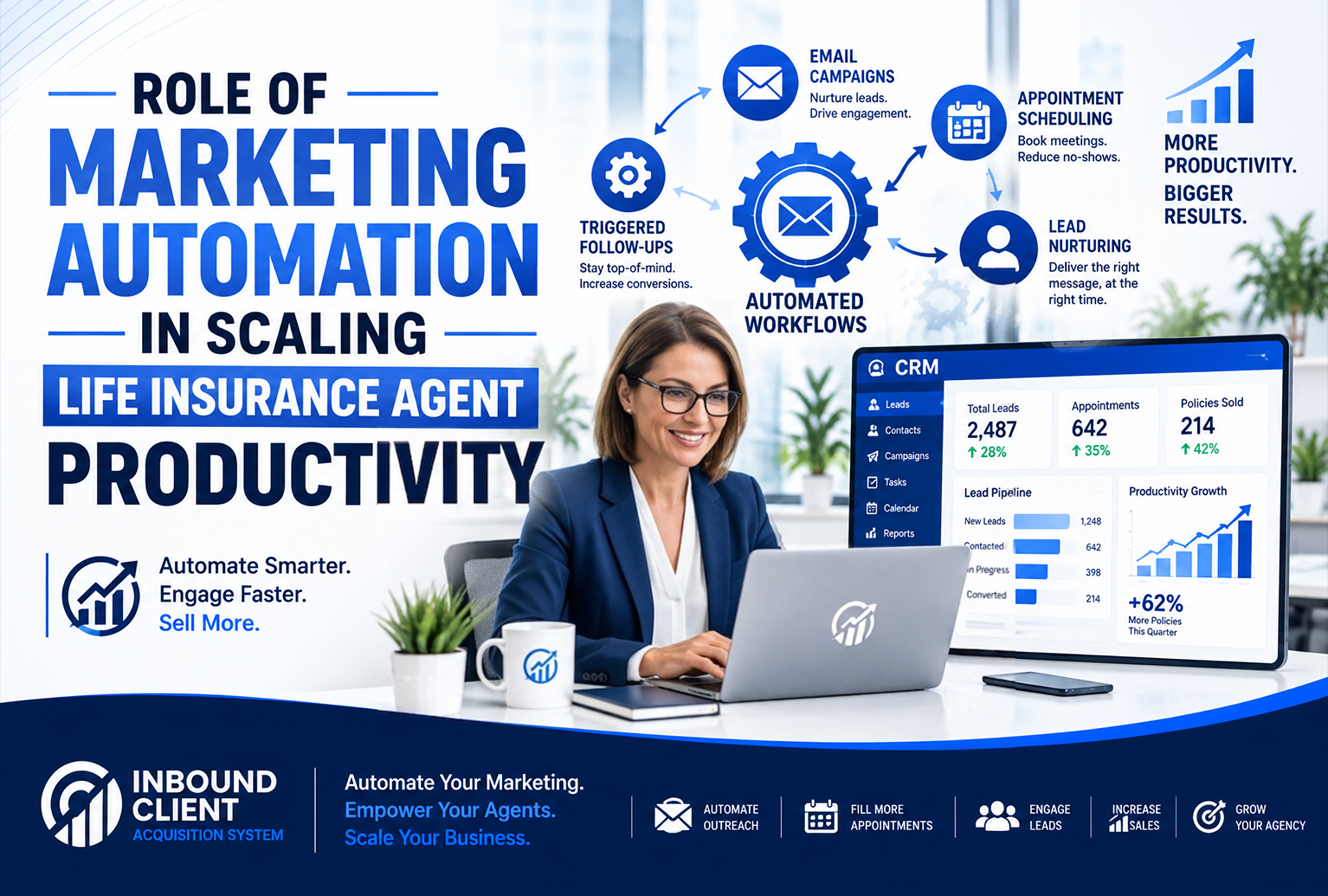
Marketing Automation for Life Insurance Agent Productivity
Life insurance is a relationship driven business, but building those relationships does not mean an agent has to handle every part of the sales process manually. From capturing leads and sending follow up messages to scheduling appointments and keeping prospects engaged, there are many repetitive tasks that can consume an agent’s day.
This is where marketing automation becomes a powerful advantage.
For life insurance agents who want to grow without constantly adding more hours to their schedule, marketing automation can create a more organized, consistent, and productive sales process. Instead of spending valuable time chasing every prospect, agents can use technology to manage routine activities while focusing their energy on meaningful conversations and closing business.
What Is Marketing Automation for Life Insurance Agents?
Marketing automation uses technology to handle repetitive marketing and communication tasks based on specific actions taken by a prospect.
For a life insurance agent, this could mean automatically responding when someone requests information, sending follow up messages, reminding a prospect about an upcoming appointment, or organizing new leads so they are easier to manage.
The goal is not to replace the agent. The goal is to help the agent work more efficiently.
A well designed automated system gives agents a structured process for moving prospects from initial interest to a real conversation and eventually to an appointment.
Why Productivity Matters in Life Insurance Sales
Productivity is not simply about making more calls or working longer hours. It is about spending more time on activities that actually contribute to revenue.
Many agents lose productive time performing tasks that could be handled automatically. Manually entering lead information, remembering follow up dates, sending appointment reminders, and checking whether a prospect responded can quickly become overwhelming as lead volume increases.
Marketing automation helps remove much of that administrative workload.
When routine tasks happen automatically, agents can dedicate more time to understanding client needs, explaining coverage options, answering questions, and building trust.
That shift can make a significant difference as an insurance business grows.
Faster Follow Up Can Create Better Opportunities
Timing matters when someone expresses interest in life insurance.
A prospect who has just requested information is likely more engaged than someone who made that request several days ago. If an agent waits too long to respond, that initial interest can fade.
Marketing automation allows the first response to happen immediately.
For example, when a prospect submits a request through an inbound campaign, an automated system can deliver the lead to the agent while also initiating follow up communication. This creates a faster connection between the prospect and the agent.
The Inbound Client Acquisition System is built around this principle, with automated processes designed to activate shortly after a prospect submits a request. The system can deliver lead information quickly, begin follow up, and support appointment scheduling.
The agent can then focus on the conversation instead of wondering what needs to happen next.
Consistent Follow Up Without Constant Manual Work
One of the biggest challenges in lead generation is consistency.
An agent may have every intention of following up with a prospect, but a busy day, appointments, applications, and other responsibilities can cause follow up to slip through the cracks.
Automation provides a reliable process.
Instead of relying entirely on memory, agents can establish sequences that continue communicating with prospects according to a defined process. This can include reminders, messages, appointment confirmations, and other appropriate communications.
Consistency does not mean sending the same message endlessly. It means creating a process where interested prospects receive timely communication and opportunities are less likely to be forgotten.
Automation Helps Agents Scale
There is a natural limit to how many manual tasks one person can manage.
An agent handling a small number of prospects may be able to track everything personally. As lead volume increases, however, manually managing every interaction becomes increasingly difficult.
Marketing automation helps solve this scalability problem.
The same basic process can support a growing number of prospects without requiring the agent to perform every administrative action individually. Lead capture, routing, follow up, and appointment scheduling can work together as part of one structured system.
This is especially important for agents who want to build a predictable business rather than simply generate more activity.
Better Organization Creates More Selling Time
A productive agent needs visibility into the sales process.
Knowing which prospects are new, which ones need follow up, which appointments are scheduled, and which opportunities are progressing makes it easier to prioritize the day.
Automation can help organize these stages so agents are not constantly searching through messages, spreadsheets, or notes to determine what should happen next.
This creates something extremely valuable: more time.
Instead of spending hours managing the process, an agent can spend those hours doing what only the agent can do well, having conversations with people who need life insurance guidance.
Marketing Automation Does Not Replace the Human Element
Life insurance is still a personal decision. People want to speak with someone they trust, ask questions, and feel confident about their choices.
Automation should support that human experience rather than replace it.
The best systems handle repetitive communication while allowing the agent to step in when personal interaction matters most.
That balance is important. Automation creates efficiency, while the agent provides empathy, expertise, and trust.
The Future of Life Insurance Agent Productivity
As competition for attention continues to increase, life insurance agents need more than motivation to grow. They need systems that help them use their time effectively.
Marketing automation can provide that structure by improving response speed, maintaining consistent follow up, organizing prospects, and supporting appointment scheduling.
For agents using an inbound approach, these capabilities become even more valuable because the system can help turn incoming interest into organized sales opportunities.
The real benefit is not simply having more technology. It is creating a repeatable process that allows an agent to spend less time managing repetitive tasks and more time helping clients.
For life insurance agents who want to scale, marketing automation is becoming less of a luxury and more of a practical part of building a productive, sustainable business.
Frequently Asked Questions
1. How does marketing automation help life insurance agents?
Marketing automation helps agents manage repetitive activities such as lead delivery, follow up communication, appointment reminders, and scheduling. This allows agents to spend more time speaking with prospects and serving clients.
2. Can marketing automation improve life insurance lead follow up?
Yes. Automation can help ensure prospects receive timely communication after expressing interest. It creates a consistent follow up process and reduces the possibility of leads being forgotten.
3. Does marketing automation replace life insurance agents?
No. Automation handles repetitive processes, but the agent remains responsible for building relationships, understanding client needs, answering questions, and guiding prospects through the insurance process.
4. Why is automation important when scaling a life insurance business?
As lead volume increases, manually managing every prospect becomes difficult. Automation provides a repeatable structure that can handle routine processes more efficiently, allowing agents to focus on conversations and revenue producing activities.