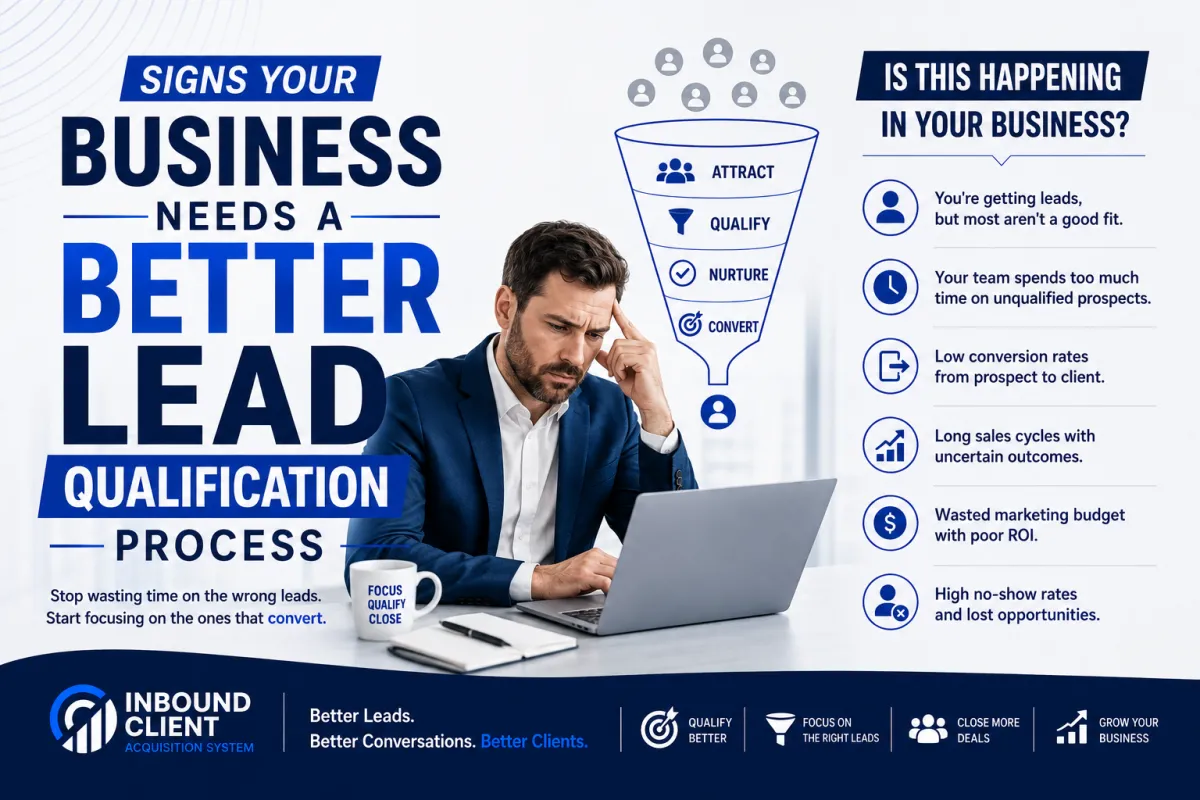
Signs Your Business Needs a Better Lead Qualification Process
Generating leads is an important part of growing any business. However, attracting a large number of prospects does not always mean you will see better sales results. Many companies focus heavily on bringing in new leads but spend very little time determining which ones are actually worth pursuing. This is where lead qualification becomes essential.
A strong lead qualification process helps your sales team focus on prospects who are genuinely interested and have the potential to become paying customers. Without it, valuable time and resources are wasted on people who are unlikely to convert. If your business is struggling with inconsistent sales, low conversion rates, or frustrated sales representatives, it may be time to improve the way you qualify leads.
What Is Lead Qualification?
Lead qualification is the process of evaluating potential customers to determine whether they are a good fit for your products or services. Instead of treating every lead the same, businesses assess factors such as interest, budget, decision making authority, business needs, and readiness to buy.
By identifying high quality leads early, sales teams can focus their efforts where they are most likely to achieve results.
Your Sales Team Spends Too Much Time on Unqualified Leads
One of the clearest signs of a weak qualification process is when sales representatives spend hours chasing prospects who never respond or have no intention of making a purchase.
If your team constantly follows up with leads that disappear after the first conversation, it is likely that the qualification process is not filtering out poor quality prospects. This not only reduces productivity but also prevents sales professionals from giving enough attention to promising opportunities.
A better qualification system helps your team prioritise leads that are more likely to convert.
Your Conversion Rate Is Lower Than Expected
Generating hundreds of leads each month may look impressive on paper, but if only a small percentage become customers, something is missing.
Low conversion rates often indicate that your marketing campaigns are attracting the wrong audience or that your qualification process is allowing unsuitable leads into the sales pipeline.
Reviewing your lead qualification criteria can help identify whether prospects truly match your ideal customer profile before they reach the sales team.
Marketing and Sales Are Not Aligned
Successful businesses rely on strong collaboration between marketing and sales. When these teams have different definitions of what makes a qualified lead, confusion quickly develops.
Marketing may celebrate generating a high volume of leads, while sales complains that those leads are not ready to buy. This disconnect creates frustration and reduces overall business performance.
Establishing clear qualification criteria ensures both teams work towards the same goal and measure success using the same standards.
Your Sales Cycle Is Becoming Longer
A lengthy sales cycle often points to poor lead quality. If your team spends weeks or even months nurturing prospects who eventually decide not to buy, valuable resources are being wasted.
A more effective qualification process identifies serious buyers earlier in the journey. This allows your sales team to move qualified prospects through the pipeline more efficiently while reducing unnecessary follow ups.
Shorter sales cycles often lead to improved productivity and higher revenue.
Your Customer Acquisition Costs Are Increasing
Every marketing campaign requires investment. When your business spends more on acquiring customers but sees little improvement in revenue, poor lead qualification may be one of the reasons.
Paying to attract unsuitable leads increases advertising costs while lowering your overall return on investment.
By focusing on higher quality prospects from the beginning, businesses can reduce wasted marketing spend and improve profitability.
Your Team Relies on Guesswork
If sales representatives decide which leads deserve attention based purely on instinct, your qualification process lacks consistency.
While experience is valuable, relying entirely on personal judgement creates uneven results across the team. Some opportunities may be overlooked while others receive attention despite having little chance of converting.
A structured qualification framework provides consistency and helps every team member evaluate leads using the same standards.
Customers Often Turn Out to Be a Poor Fit
Winning new customers is exciting, but signing clients who are not suited to your product or service often creates long term problems.
Poor fit customers may require excessive support, cancel their contracts quickly, or leave negative reviews because your solution does not meet their expectations.
Improving lead qualification helps ensure that your business attracts customers who genuinely benefit from your offering and are more likely to remain loyal.
There Is No Clear Ideal Customer Profile
Businesses that attempt to sell to everyone often struggle to qualify leads effectively. Without a clear understanding of your ideal customer, it becomes difficult to separate high quality prospects from those who are unlikely to buy.
Developing a detailed customer profile allows your marketing and sales teams to identify the right audience more accurately. This includes factors such as industry, company size, budget, location, and common challenges.
The clearer your ideal customer profile, the easier it becomes to qualify leads successfully.
How to Improve Your Lead Qualification Process
Improving lead qualification does not require a complete overhaul. Small changes can deliver significant improvements over time.
Consider these practical steps:
Define your ideal customer profile clearly.
Establish consistent qualification criteria for every lead.
Encourage regular communication between marketing and sales teams.
Use customer data to refine your qualification process.
Review and update your criteria regularly as your business grows.
Consistent evaluation helps ensure your qualification process continues to support changing business goals and customer expectations.
Final Thoughts
A successful business is not built simply by generating more leads. It grows by identifying the right leads and converting them into satisfied customers. If your sales team is struggling with low conversions, longer sales cycles, rising acquisition costs, or poor customer fit, your lead qualification process may need improvement.
By refining how you identify and prioritise prospects, your business can increase efficiency, improve collaboration between teams, and achieve stronger sales results. Investing in a better lead qualification process today can create lasting benefits for both your customers and your bottom line.
Frequently Asked Questions
What is the purpose of lead qualification?
Lead qualification helps businesses identify prospects who are most likely to become customers. This allows sales teams to focus on high value opportunities rather than spending time on unsuitable leads.
How can poor lead qualification affect sales?
Poor lead qualification can result in lower conversion rates, longer sales cycles, higher marketing costs, and reduced productivity because sales teams spend time on leads that are unlikely to purchase.
How often should businesses review their lead qualification process?
Businesses should review their lead qualification process regularly, especially when introducing new products, entering new markets, or noticing changes in customer behaviour and sales performance.
What makes a lead qualified?
A qualified lead typically has a genuine need for your product or service, fits your ideal customer profile, has the authority to make purchasing decisions, and is ready or likely to buy within a reasonable timeframe.