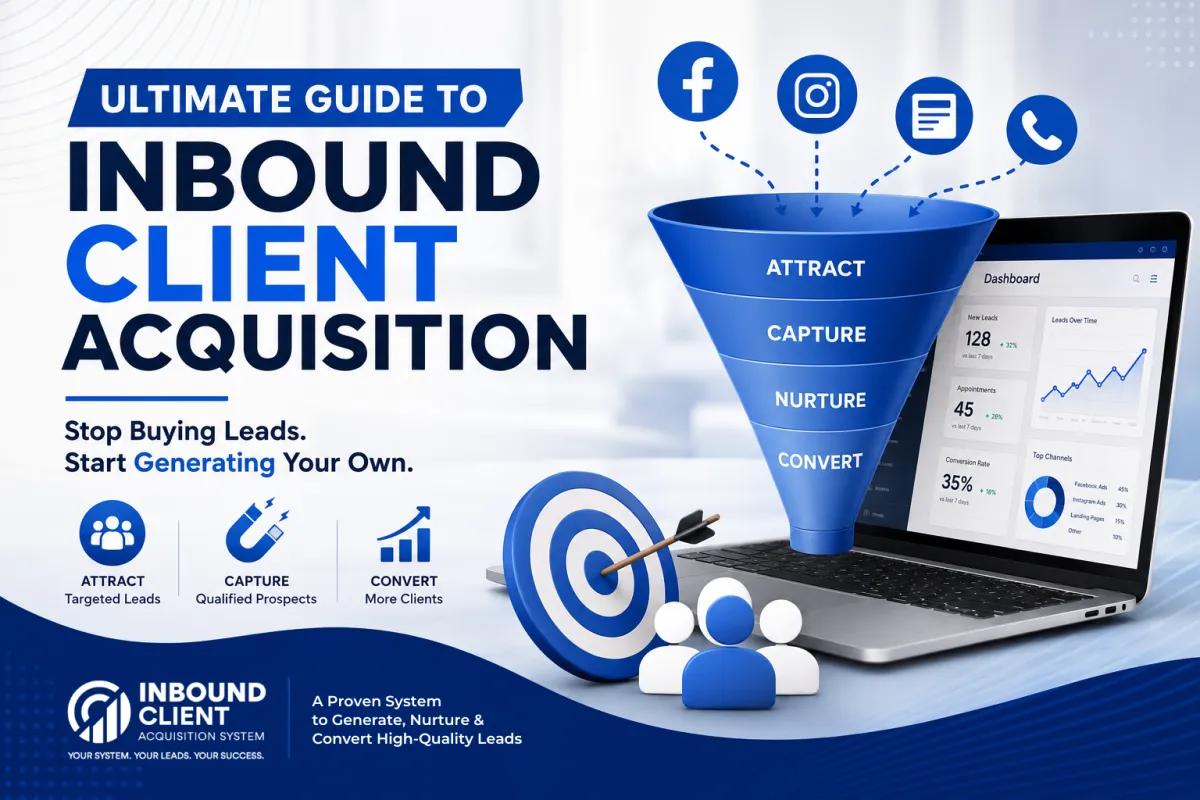
Ultimate Guide to Inbound Client Acquisition for B2B Growth
In today's competitive business environment, attracting high quality clients requires more than cold outreach and paid advertising. Modern buyers conduct extensive research before contacting a service provider, making inbound client acquisition one of the most effective strategies for sustainable business growth. Instead of chasing prospects, inbound marketing helps businesses position themselves where potential clients are already searching for solutions.
Whether you run a digital agency, consulting firm, software company, or professional services business, a well planned inbound acquisition strategy can generate qualified leads, build trust, and create long term customer relationships. This guide explores everything you need to know about inbound client acquisition and how to build a process that consistently brings in valuable clients.
What Is Inbound Client Acquisition?
Inbound client acquisition is the process of attracting potential clients through valuable content, educational resources, search engine optimization, social proof, and personalized experiences. Rather than interrupting prospects with unsolicited sales messages, inbound strategies encourage prospects to discover your business naturally while searching for answers to their problems.
The objective is simple. Provide helpful information that addresses customer challenges, establish credibility, and guide prospects toward becoming paying clients.
Businesses that invest in inbound marketing often experience higher quality leads because prospects already understand their needs and actively seek solutions before making contact.
Why Inbound Client Acquisition Matters
Business buyers have become more informed than ever. They compare multiple providers, read reviews, consume educational content, and evaluate expertise before making purchasing decisions.
Inbound acquisition helps businesses remain visible during this research phase. Instead of competing solely on price, companies can demonstrate knowledge, industry expertise, and proven results.
Some of the biggest benefits include:
Higher quality leads with stronger purchase intent.
Lower long term customer acquisition costs.
Improved brand authority and credibility.
Better client relationships built on trust.
Sustainable lead generation over time.
Unlike outbound campaigns that often stop producing results once spending ends, inbound marketing assets continue attracting visitors and leads for months or even years.
Build a Strong Content Strategy
Content sits at the heart of every successful inbound acquisition strategy. Potential clients look for answers before they look for vendors. By publishing useful content, businesses position themselves as trusted advisors rather than sales focused organizations.
Focus on creating content that addresses common customer questions, industry trends, practical solutions, and real business challenges. Blog articles, case studies, white papers, guides, and industry reports all help build credibility.
Each piece of content should solve a specific problem while naturally leading readers toward your products or services.
Consistency is equally important. Publishing valuable content regularly helps improve search visibility while keeping your audience engaged.
Optimize Your Website for Search Engines
Search engine optimization plays a critical role in inbound client acquisition. Even exceptional content delivers limited value if potential clients cannot find it.
Start by researching relevant keywords your target audience uses throughout the buying journey. Include these keywords naturally within page titles, headings, meta descriptions, and content without sacrificing readability.
A fast loading website, clear navigation, mobile responsiveness, and structured content also contribute to better search rankings and user experience.
Remember that search engine optimization is not only about attracting traffic. It is about attracting the right audience that is genuinely interested in your services.
Build Trust Through Social Proof
Trust is one of the biggest factors influencing buying decisions. Before engaging with a business, potential clients want evidence that others have achieved positive results.
Include customer testimonials, detailed case studies, client success stories, industry certifications, and measurable outcomes throughout your website. Real examples help prospects visualize the value your business can deliver.
Sharing insights from previous projects demonstrates expertise while reducing uncertainty during the decision making process.
Create High Converting Landing Pages
Every marketing campaign should direct visitors toward a focused landing page with a clear objective. Instead of overwhelming visitors with excessive information, landing pages should communicate a single value proposition and encourage one specific action.
Keep messaging concise, highlight key benefits, address common concerns, and include compelling calls to action. Whether offering a consultation, product demonstration, or downloadable resource, simplicity often improves conversion rates.
Regularly test headlines, layouts, and forms to identify opportunities for improvement.
Nurture Leads Effectively
Not every visitor becomes a client immediately. Many prospects require additional information before making a purchasing decision.
Lead nurturing allows businesses to maintain communication through educational emails, valuable resources, industry updates, and personalized follow ups. The goal is to remain helpful throughout the buyer journey rather than applying unnecessary sales pressure.
Consistent nurturing keeps your business top of mind until prospects are ready to move forward.
Measure and Improve Performance
Successful inbound client acquisition depends on continuous improvement. Track important performance indicators such as website traffic, organic search growth, lead conversion rates, content engagement, consultation requests, and customer acquisition costs.
Analyzing these metrics helps identify which strategies generate the highest quality leads and where improvements are needed.
Businesses that regularly optimize their inbound process often achieve stronger long term growth than those relying on one time campaigns.
Common Mistakes to Avoid
Many businesses struggle with inbound acquisition because they focus on quantity instead of quality. Publishing generic content without understanding customer intent rarely produces meaningful results.
Avoid creating content solely for search engines. Write for real people while naturally incorporating relevant keywords. Inconsistent publishing, unclear calls to action, and neglecting lead nurturing can also limit success.
Most importantly, avoid treating inbound marketing as a short term strategy. Building authority and organic visibility requires patience, consistency, and ongoing optimization.
Conclusion
Inbound client acquisition is more than a marketing tactic. It is a long term business growth strategy that helps companies attract qualified prospects, build credibility, and develop lasting customer relationships. By creating valuable content, optimizing your website for search engines, showcasing social proof, nurturing leads, and continuously measuring performance, businesses can establish a predictable pipeline of high quality opportunities.
As buyer behavior continues to evolve, organizations that invest in inbound strategies will be better positioned to earn trust, increase visibility, and generate sustainable revenue without relying solely on traditional outbound sales methods.
Frequently Asked Questions
What is inbound client acquisition?
Inbound client acquisition is the process of attracting potential clients through valuable content, search engine optimization, educational resources, and trust building strategies instead of relying on direct sales outreach.
How long does inbound client acquisition take to deliver results?
Most businesses begin seeing measurable improvements within three to six months, although significant long term growth typically comes from consistent effort over time.
Is inbound client acquisition suitable for small businesses?
Yes. Small businesses can benefit significantly because inbound marketing helps compete with larger companies by demonstrating expertise, building authority, and attracting qualified leads organically.
What is the difference between inbound and outbound client acquisition?
Inbound acquisition focuses on attracting prospects through helpful content and online visibility, while outbound acquisition involves proactively reaching out to potential clients through methods such as cold emails, cold calls, and direct advertising.